Every September when Apple unveils a new iPhone, the big tech story the next day is about some new feature the company has added.
This time around though the huge talking point looks certain to be that Apple is taking something away with the iPhone 7: the 3.5mm headphone socket.
Yes, after decades of service the 3.5mm jack - which has been a common feature on portable tech dating back to the days when the original Sony Walkman made it popular - could be old news.
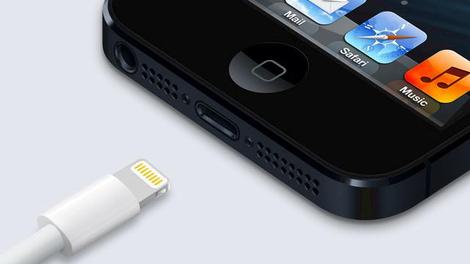
Instead, if you want to listen to tunes on your new iPhone, you'll have to use either buds designed for Apple's Lightning connector or a pair of wirelessly connected bluetooth headphones.

Apple won't be the first phone manufacturer to cull the ancient standard - the Moto Z, which was announced earlier this year, has done the same - but when Apple unleashes a feature like this, it's going to impact far more people.
Apple is one of very few manufacturers that can change a feature like this and assume that it's customers will continue to buy the devices despite something so potentially divisive.
With the iPhone 7 the removal of the jack would mean even more millimeters shaved off of the next iPhone - or that by utilising the space saved by not having a plug, Apple could make the battery slightly bigger.
- The iPhone 7 headphone jack saga: the story so far
But what will it mean for you, the phone-buying public? Though there are suggestions that Apple will release a 3.5mm-to-Lightning adapter (or even put it in the box), it does seem increasingly likely that when you next buy headphones, you might have to make a big decision about which kind of technology you back: Lightning or Bluetooth.
So here's the key question: which is better?
Data Transfer Speeds
With Lightning or Bluetooth, the audio signal is transferred to our headphones digitally - meaning that the signal isn't degraded like it is with a traditional 3.5mm jack.
Instead, the audio signals are decoded by the digital-analogue converter (DAC) in our headphones, pulling the bits apart and making them into the smooth analogue sound we know.
Perhaps the simplest way to compare the two is in terms of how much data they can transfer: the more data they can shift between your phone and your headphone's DAC, the better quality audio can be. More data means more bits of sound to play with and reassemble - and on this measure, there's only one winner.
Simply put, Lightning cables are capable of transferring much more data than Bluetooth, which means higher fidelity audio in your ears.

Dr Kevin Curran, senior member of the Institute of Electrical and Electronics Engineers and reader of Computer Science at Ulster University puts it in megabit terms - pointing out that even the latest version of Bluetooth (4.2) can only transfer at a maximum of 25Mbps - that's around 3.25 megabytes per second.
The Lightning port in current iPhones meanwhile works at USB 2.0 speeds - that's around 480Mbps - or around 60 megabytes per second.
If, as rumoured, the iPhone 7 Lightning port is brought up to match USB 3.0's data output that could mean a theoretical transfer rate of 5Gbps - or around 640 megabytes per second. This would be a huge gulf between the two technologies.
"Quite simply, using the Lightning port offers superior audio listening", Dr Curran argues.
There is also a differentiation between the two standards in terms of how they handle audio, and this is where the difference in speed becomes apparent.
To send sound, Bluetooth uses the "A2DP" profile, which has one major flaw: it's a 'lossy' format. It's the same principles as used by, say, JPEG photos or MP3 tracks where algorithms strip out or simplify some data, to create smaller file sizes.
And things get worse for the wireless standard on Apple's devices: current iPhone Bluetooth implementation supports a number of codecs, but curiously not the highly regarded aptX codec. This means the best the iPhone can manage is the proprietary 256kbps AAC codec, which can't handle current high-end formats.
So even if you start with a high quality track, it'll end up being compressed. It's unclear what codecs Lightning might use - but given the much greater bandwidth, sending lossless audio should be less of a problem.
Bits and Samples
This data wrangling though doesn't give the full picture, though as it also affects the amount of digital information that can be used to reconstruct sounds in your ears.
The way audio quality is measured is in terms of sample rate and bit-depth. Sample rate is essentially the number of audio samples every second - CD quality is 44100 times per second, for instance - or 44.1khz.
Bit-depth is the amount of data stored in each sample. CDs have 16-bit audio - which works out at over 65,000 bits.

CD quality is all that Bluetooth is really equipped to deal with - but under Apple's Lightning specification, it also supports much more: 24-bit audio, meaning over 16 million bits per sample - and double the sample rate, at 96khz. In other words - Lightning is much better equipped to handle vastly more information.
The reason this matters is that we're about to enter a new world of Hi-Res audio tracks, where the bit rates and sample rates available for our phones are rapidly increasing. The new LG V20 handset, for instance, has a 32-bit quad DAC, massively improving the quality of sound that can come out of your phone - and as services like Tidal offer increasingly high quality tunes, these phones can make use of them.
So assuming that your source audio is high enough quality, Lightning is much better positioned to offer a better listening experience.
There's also the problem of Bluetooth being wireless - and thus liable to interference. Bluetooth uses the same 2.4Ghz spectrum that WiFi and a host of other wireless technologies uses.
If you're in a "noisy" environment, there's a chance that the signal could drop or degrade - which could make listening a frustrating experience.
No Contest
The Lightning/Bluetooth comparison isn't an easy one - as it depends on what factors you're most interested in. One thing we've failed to mention is the convenience of wireless headphones - there's a freedom to being untethered to your phone that far outweighs sound quality.
But the biggest problem with Lightning is that it only works with Apple products. If you ever want to listen to audio from anything but an iPhone or iPad, you're going to need to start lugging around an extra pair of headphones or a fiddly adaptor… if you can afford one.

And it'll be interesting to see if Apple come up with some sort of solution to get around the fact that Lightning headphones won't be able to be used while charging (without a weird split converter) - as this could be a deal breaker for many users.
Bluetooth also has its challenges: Because it won't draw power from your phone, you'll need to remember to charge up your headphones regularly. And depending on where you are, interference could become a real pain.
But ultimately one thing is clear: if you're an audiophile, and you want the highest quality listening experience there is only one viable winner: the Lightning cable.
from TechRadar: Phone and communications news http://www.techradar.com/1327836
No comments:
Post a Comment